History
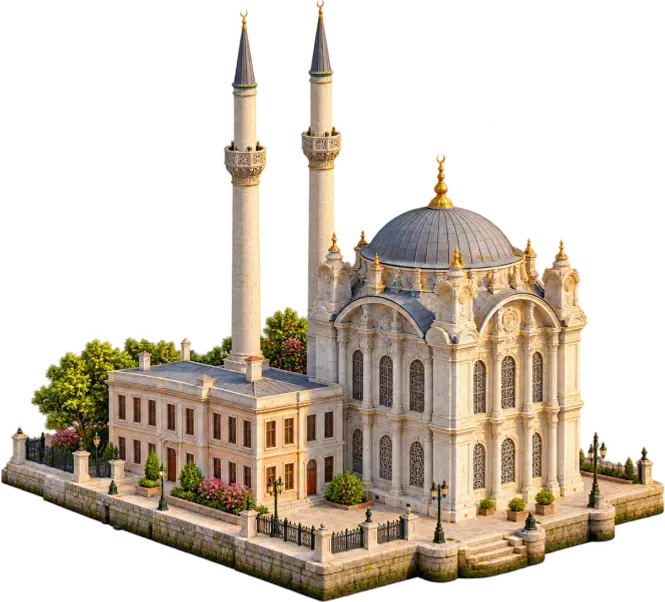
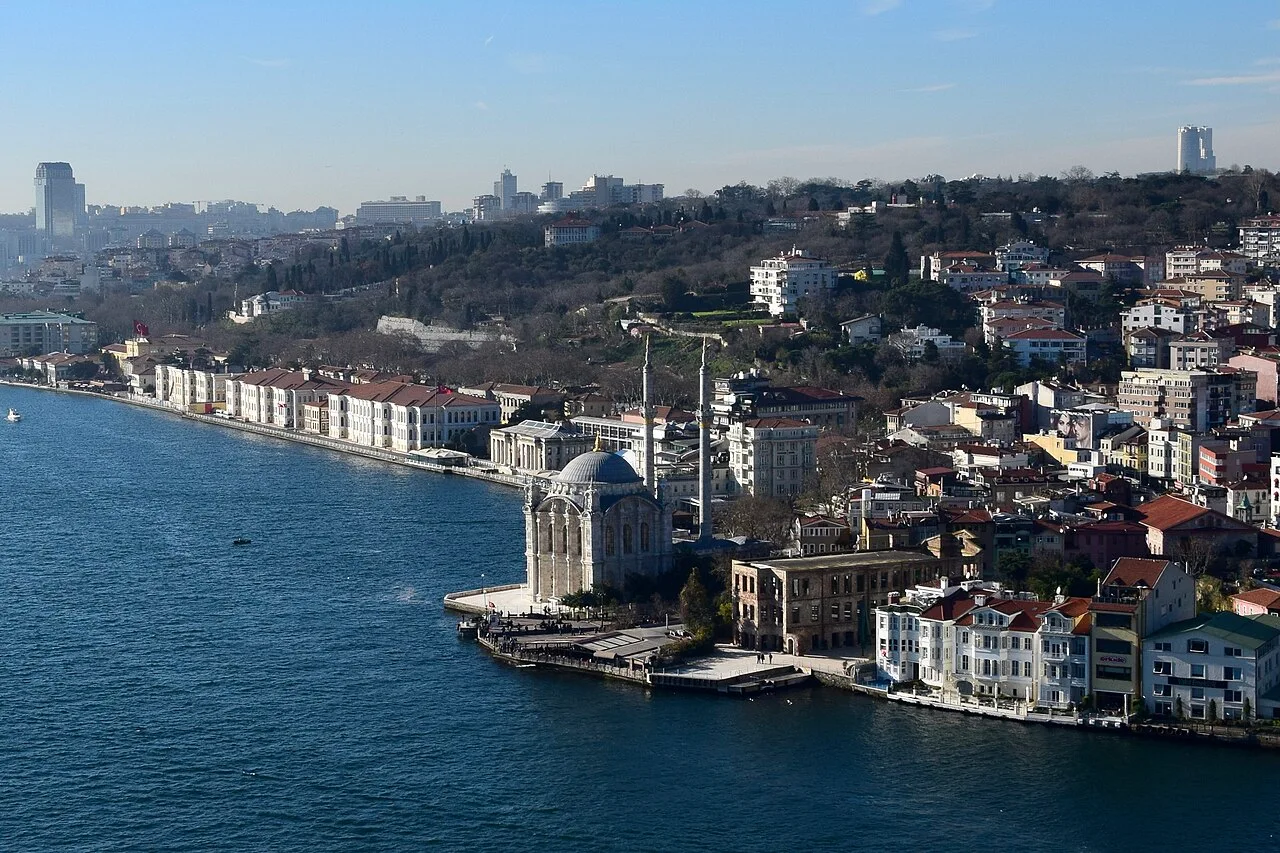
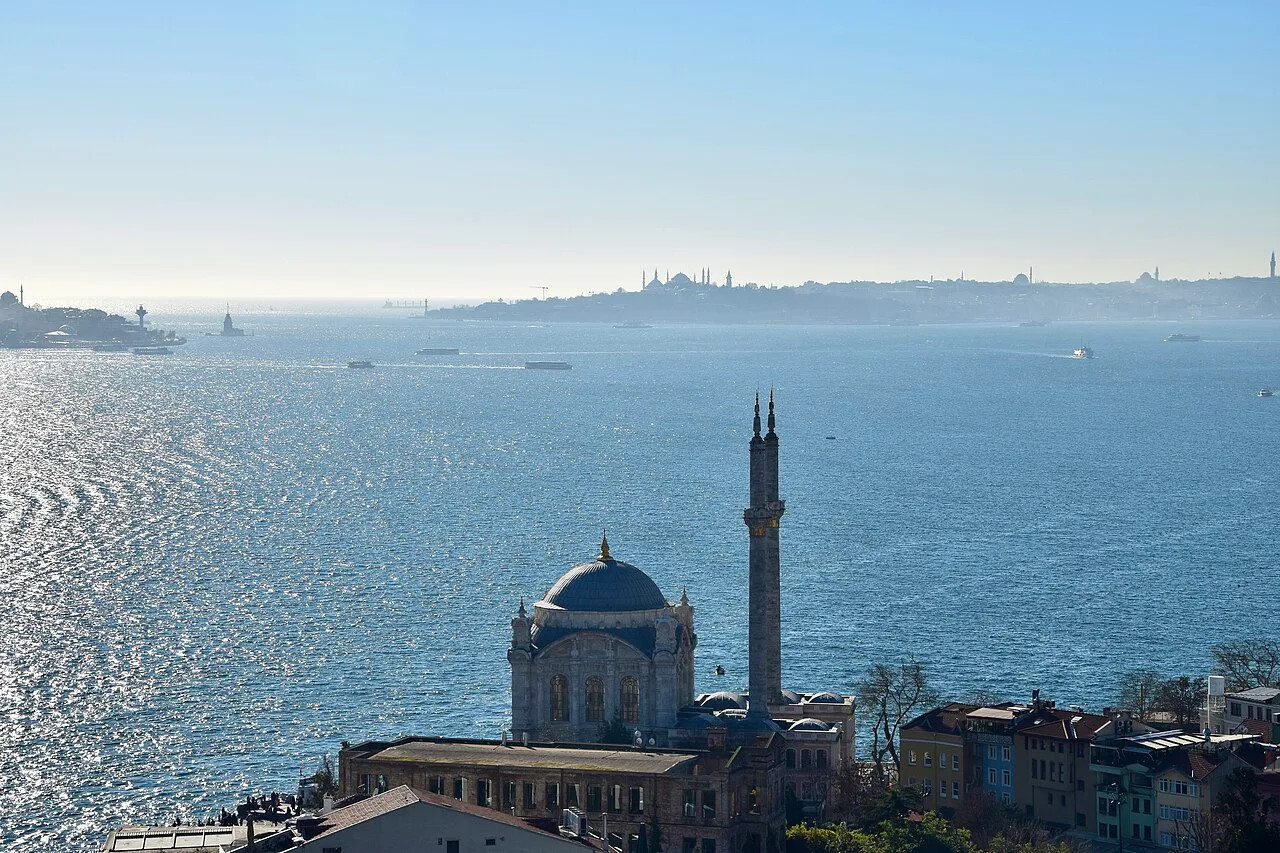
Also called the Büyük Mecidiye Mosque, it was commissioned by Sultan Abdülmecid. Architect Nikogos Balyan gave it ornate façades, slender minarets and tall windows opening towards the water.
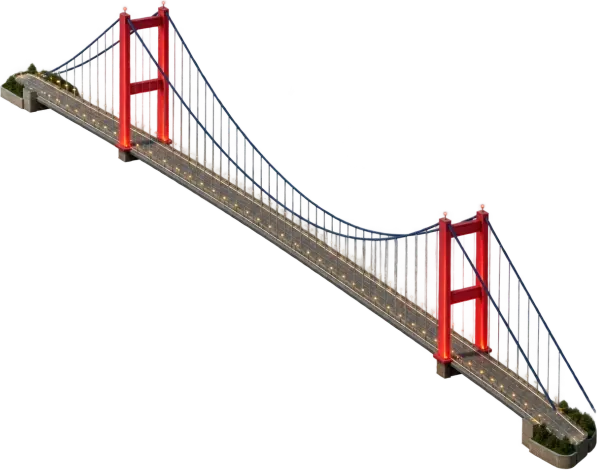
The mosque’s tall windows and elaborate exterior give it a striking relationship with the water. In photographs, the scale of the neighbouring suspension bridge can disguise how compact the mosque actually is. Looking at each separately reveals two very different periods of Istanbul’s architecture.
Behind the landmark
Abdülmecid was also a calligrapher. Some of the mosque’s calligraphic panels were written by the sultan himself.
The sultan’s calligraphy adds a personal layer to an imperial commission. It connects the patron with the interior through writing, while the exterior introduces the building to everyone passing along the shore.
Important events
- 1894
An earthquake badly damages the mosque.
- 1984
A fire leads to another restoration.
What to look for from the water
Try to see the mosque’s minarets independently of the bridge towers. The waterfront location makes the contrast between Ottoman stonework and the modern crossing particularly clear from a boat.
Questions about this landmark
What is Ortaköy Mosque’s other name?
Its formal name is Büyük Mecidiye Mosque, after its patron Sultan Abdülmecid.
Which bridge is next to Ortaköy Mosque?
The nearby crossing is the 15 July Martyrs Bridge, originally called the Bosphorus Bridge.