History
Mehmed II began the palace after the conquest of Istanbul. Its courtyards, council chambers, school and private apartments formed the heart of Ottoman government for nearly four centuries.
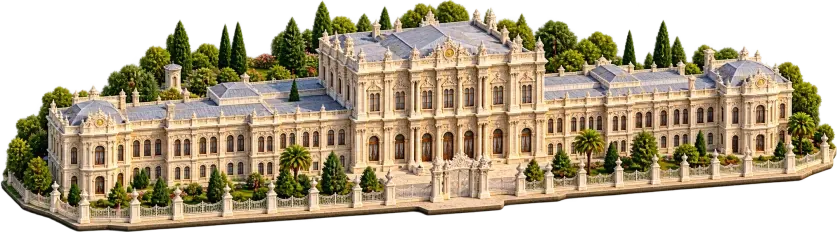
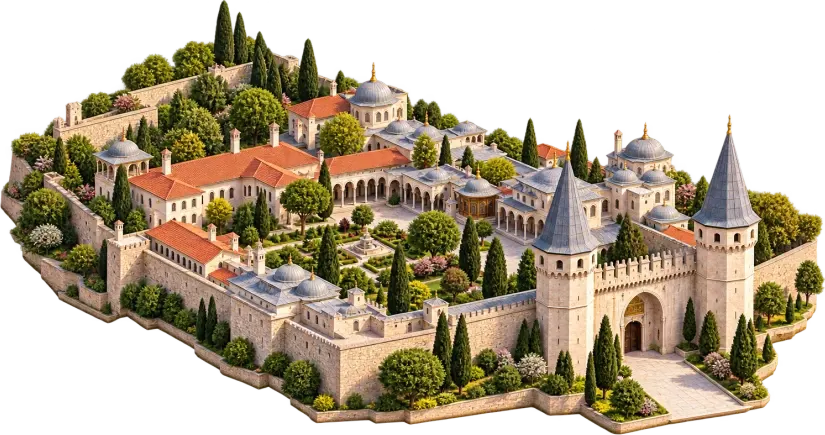
Topkapı is a complex rather than one continuous waterfront façade. Courts, gates and separate pavilions express different levels of access and ceremony. Comparing it with Dolmabahçe helps explain the later shift towards a much larger, unified palace building beside the strait.
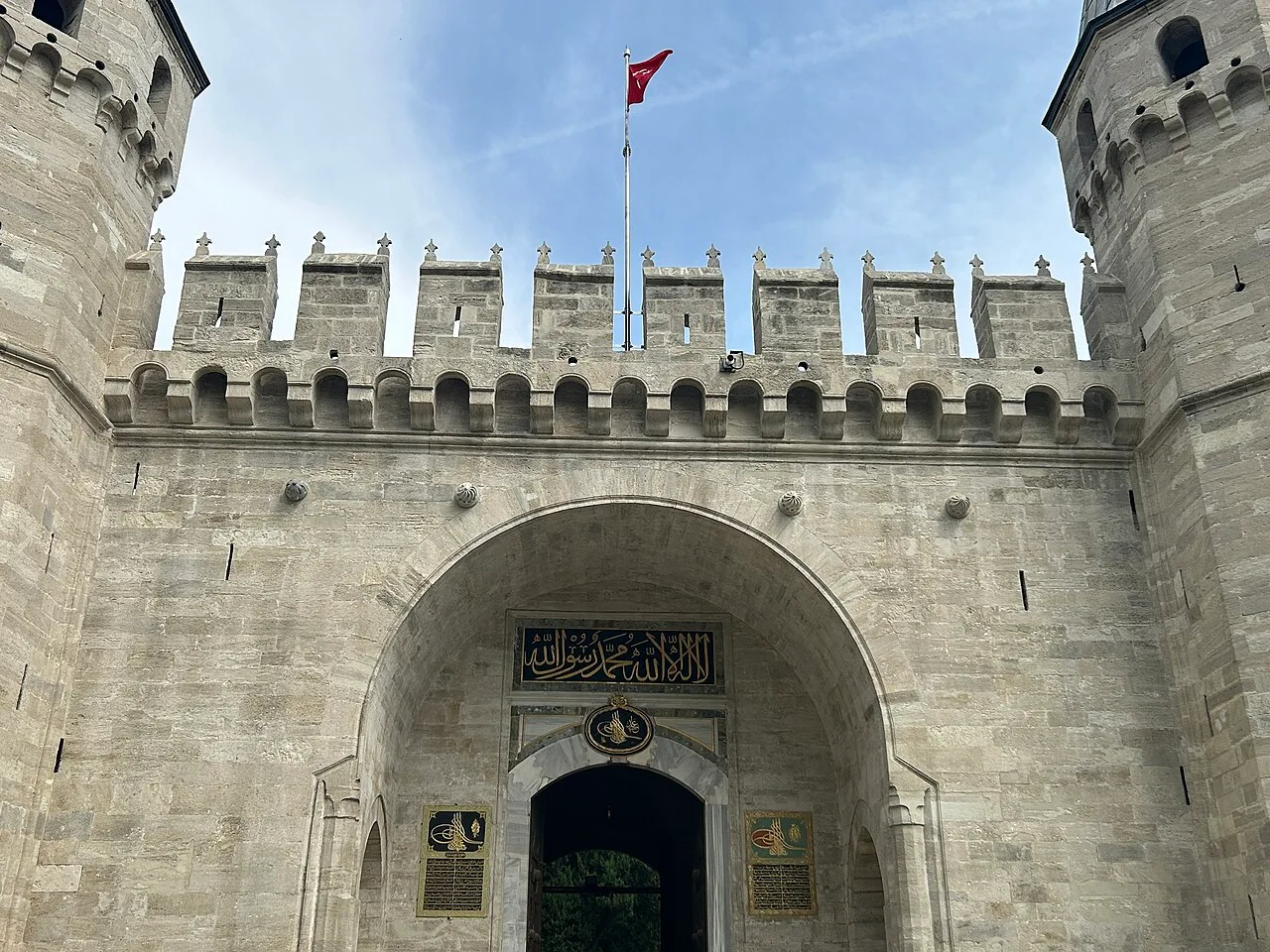
Behind the landmark
Originally known as the New Palace, it later took the name Topkapı from the Cannon Gate pavilion. Its many courtyards reveal a palace that grew over generations.
The change of name from New Palace to Topkapı preserves a link with the seaward gateway. Names can retain traces of a vanished or changed urban setting, even when the surviving complex has a different visual focus.
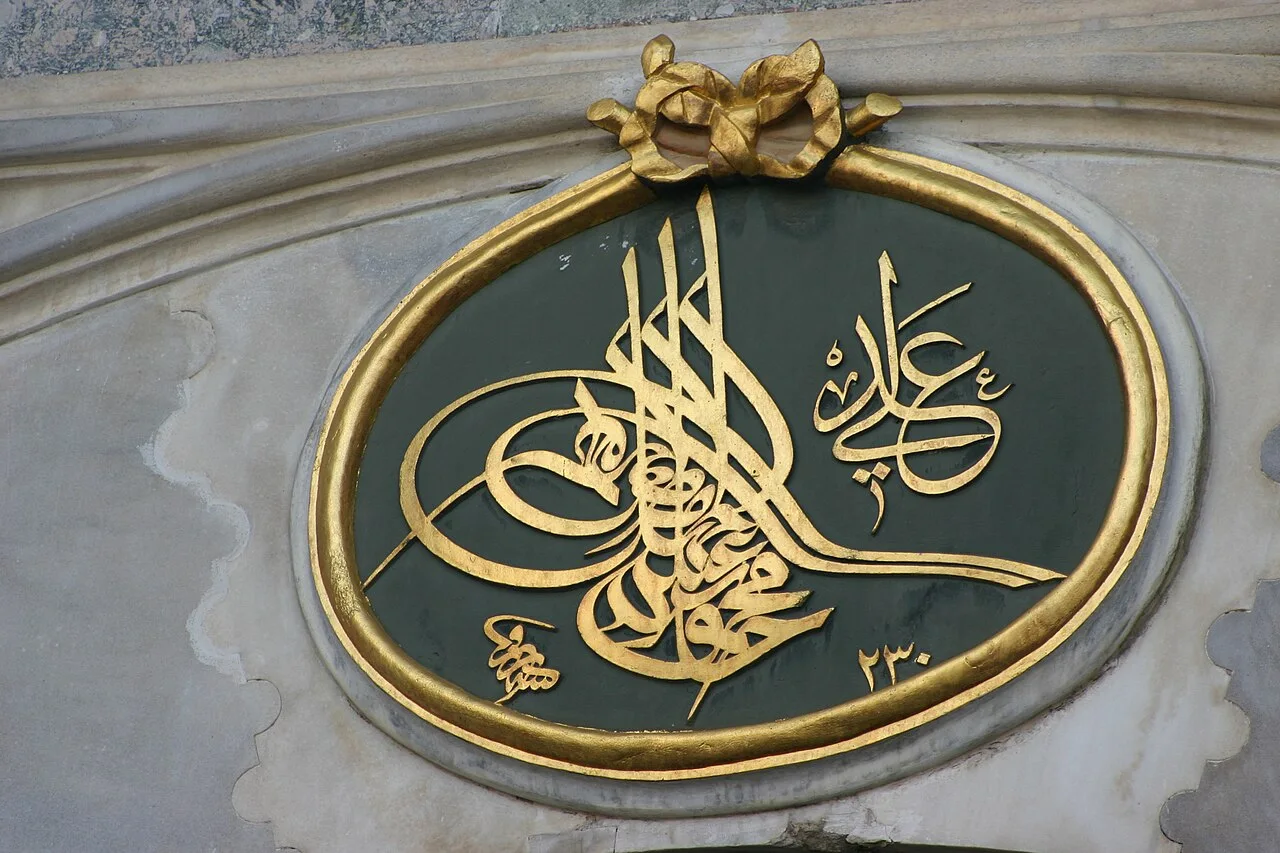
Important events
- 1478
The original palace construction is completed.
- 1924
Topkapı becomes a museum in the new Republic.
What to look for from the water
Look for the palace grounds and pavilions above the wooded Sarayburnu shoreline. The full courtyard sequence cannot be understood from a boat alone; it belongs to a separate museum visit.
Questions about this landmark
Where is Topkapı Palace?
It stands at Sarayburnu in Istanbul’s historic peninsula, in Fatih district.
How does Topkapı differ from Dolmabahçe?
Topkapı is a complex of courts and separate buildings; Dolmabahçe has a more continuous monumental waterfront palace frontage.