History
Built under Mehmed II before the conquest of Constantinople, the fortress stands opposite Anadolu Fortress at a narrow passage of the Bosphorus.
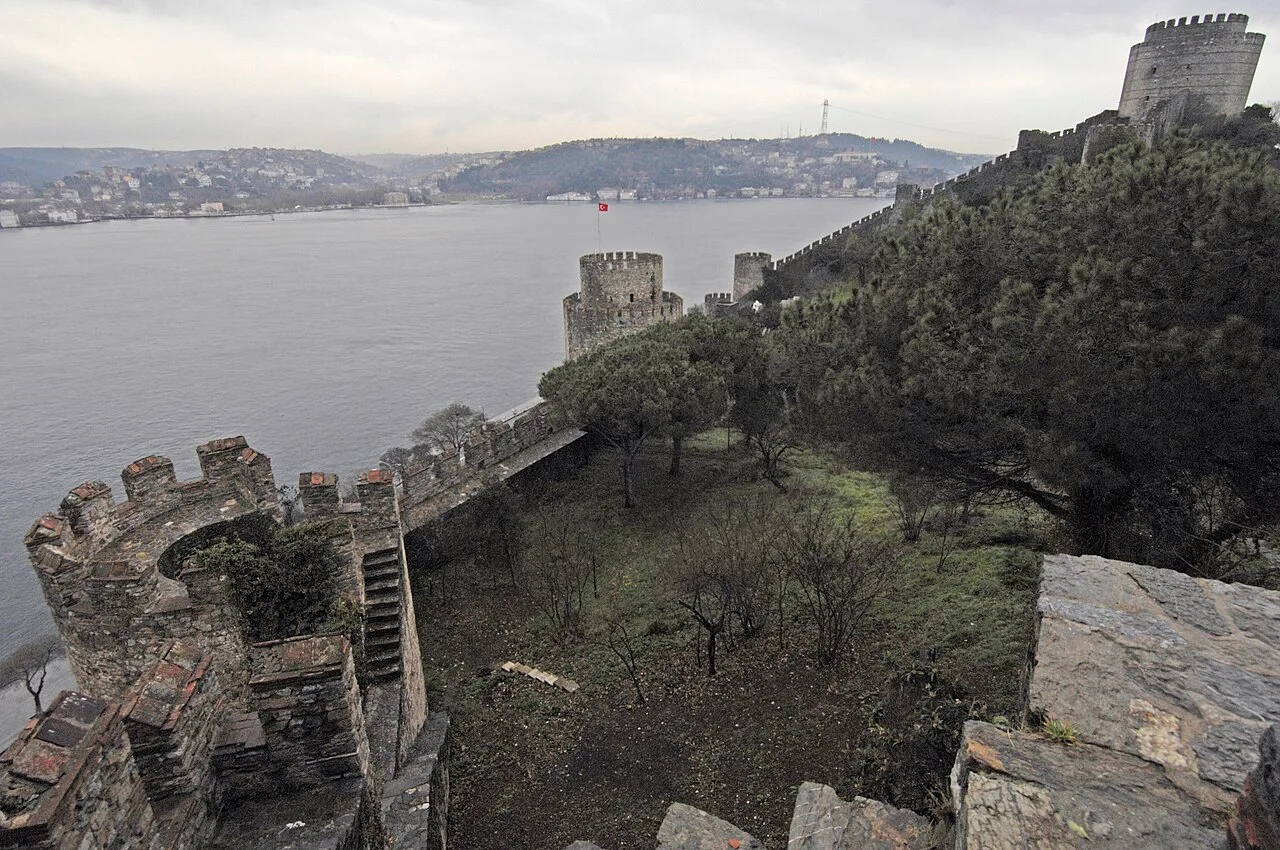
The fortress helped control assistance approaching Constantinople from the Black Sea before the 1453 conquest. Its position opposite Anadolu Fortress explains its purpose more clearly than the towers alone: the two shores formed a coordinated defensive landscape.
Behind the landmark
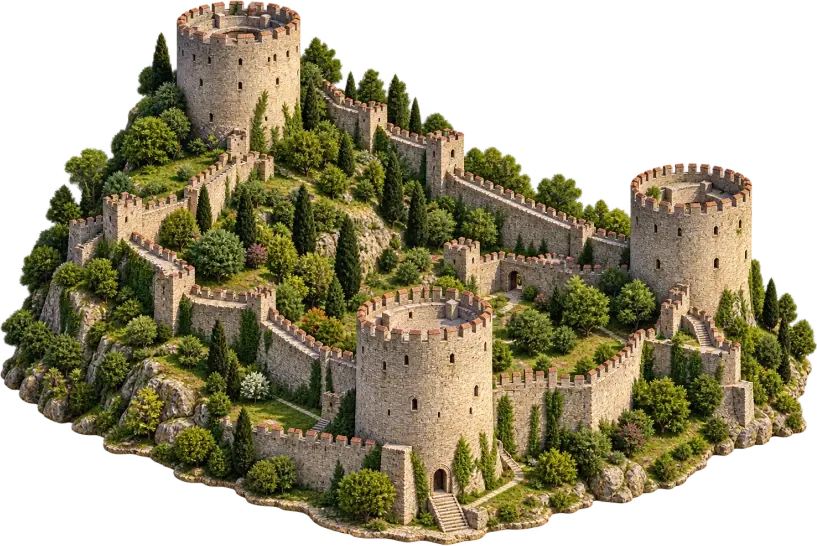
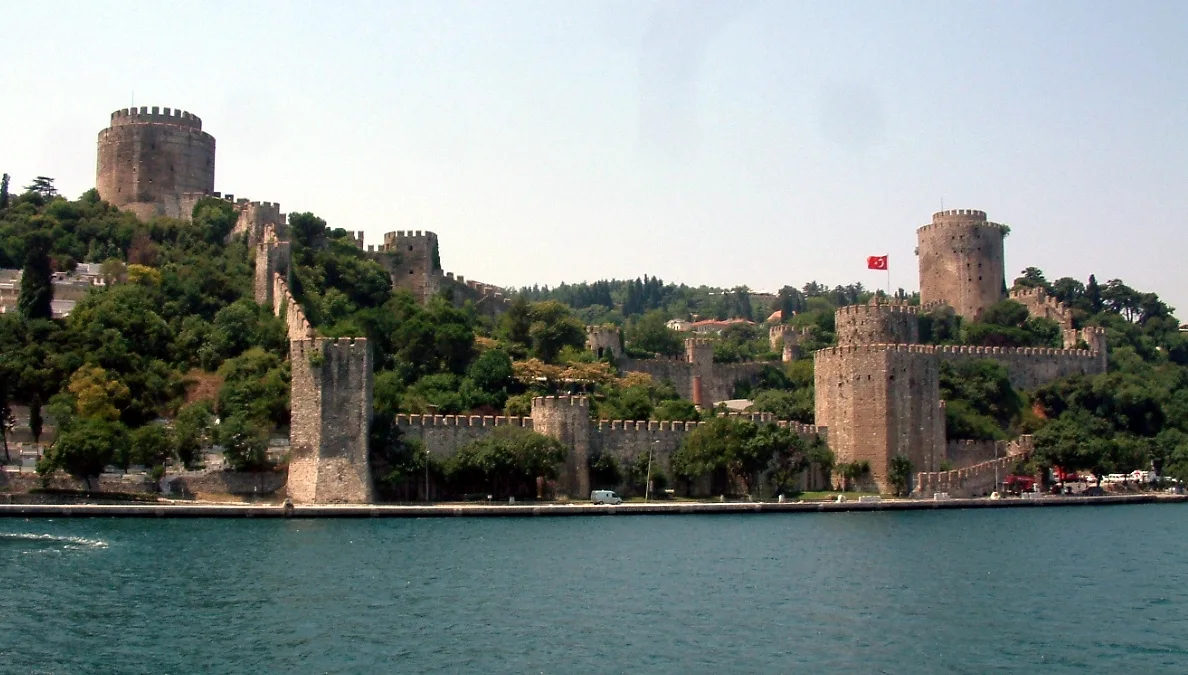
Its construction took just 139 days. The three great towers carry the names of the pashas responsible for them: Çandarlı, Saruca and Zağanos.
The speed of construction is striking, but the site also rewards slower observation. The great towers, smaller bastions and walls respond to a hillside rather than a flat plan. Their uneven levels make the landscape part of the architecture.
Important events
- 1452
Construction is completed between April and August.
- 1953
A major restoration programme begins after the conquest’s 500th anniversary.
What to look for from the water
Look upward from the shoreline to follow the walls between the main towers. Compare the fortress’s spread across the slope with the more compact Anadolu Fortress on the opposite shore.
Questions about this landmark
Who built Rumeli Fortress?
Sultan Mehmed II commissioned it in 1452 before the conquest of Constantinople.
Why are the two fortresses opposite each other?
Their positions helped control passage through a narrow part of the Bosphorus.